








‘Wrath of the Gorgons’ examines anger beyond its association with destruction or loss of control, considering its potential to provoke change and reclaim agency.
Further ascending through Dante's Purgatorio, ‘Wrath of the Gorgons’ explores the destructive and transformative nature of anger. Reinterpreting the myth of Medusa and her sisters, Stheno and Euryale, the collection investigates the historical and cultural vilification of feminine rage, examining the narrative progression from ‘victim’ to ‘villain’; a metaphor for the ways in which a woman’s frustration is often condemned, suppressed and ultimately weaponised against her.
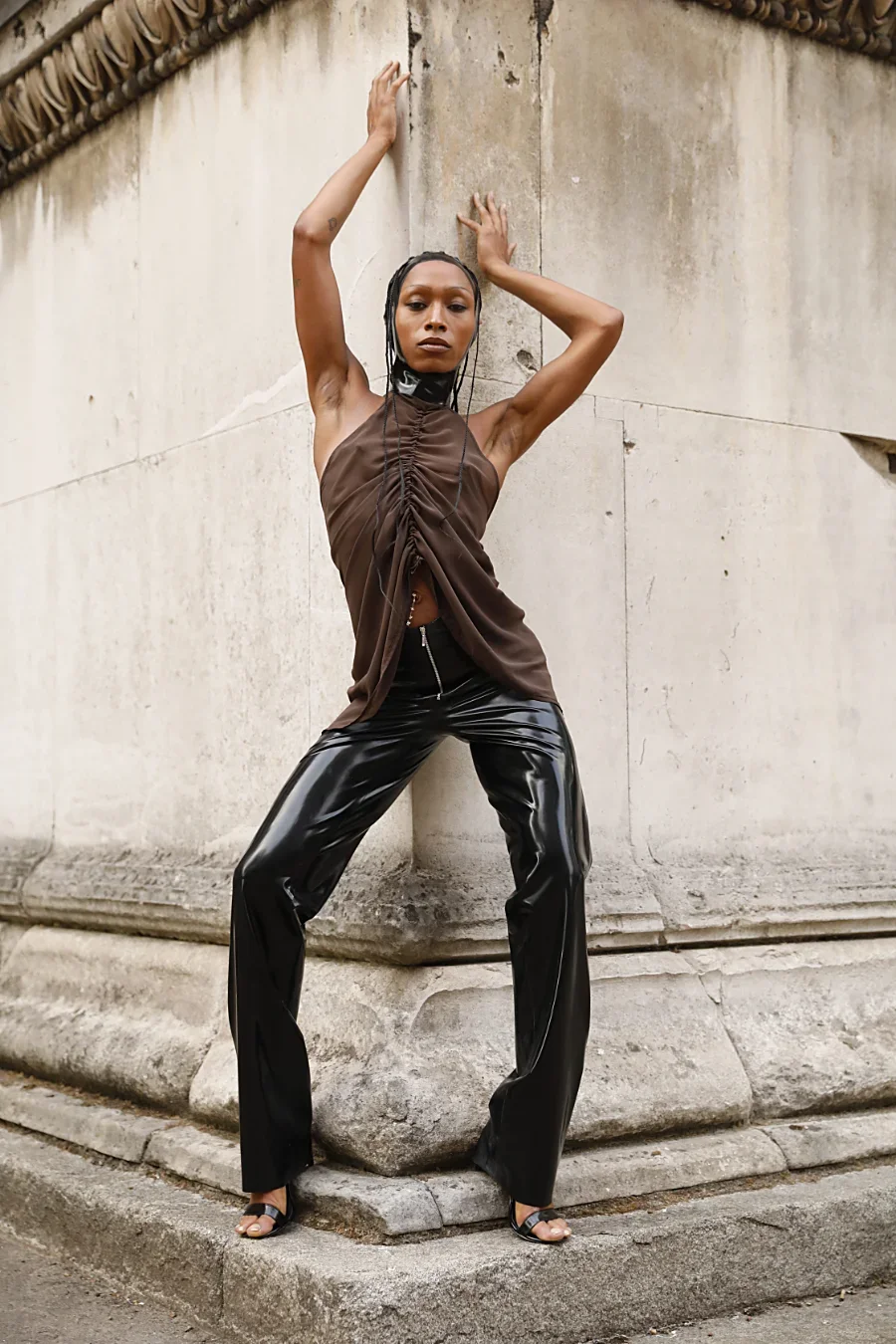
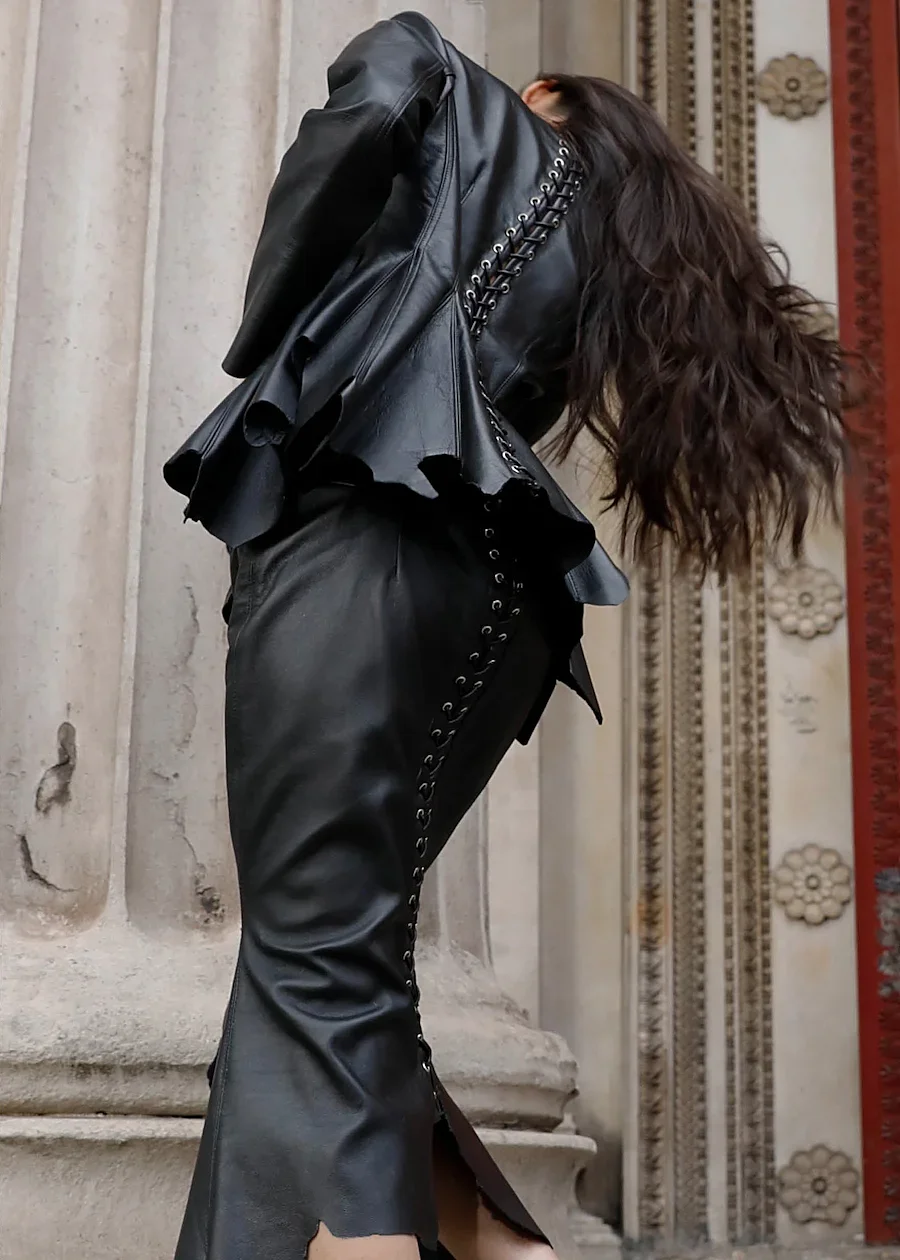
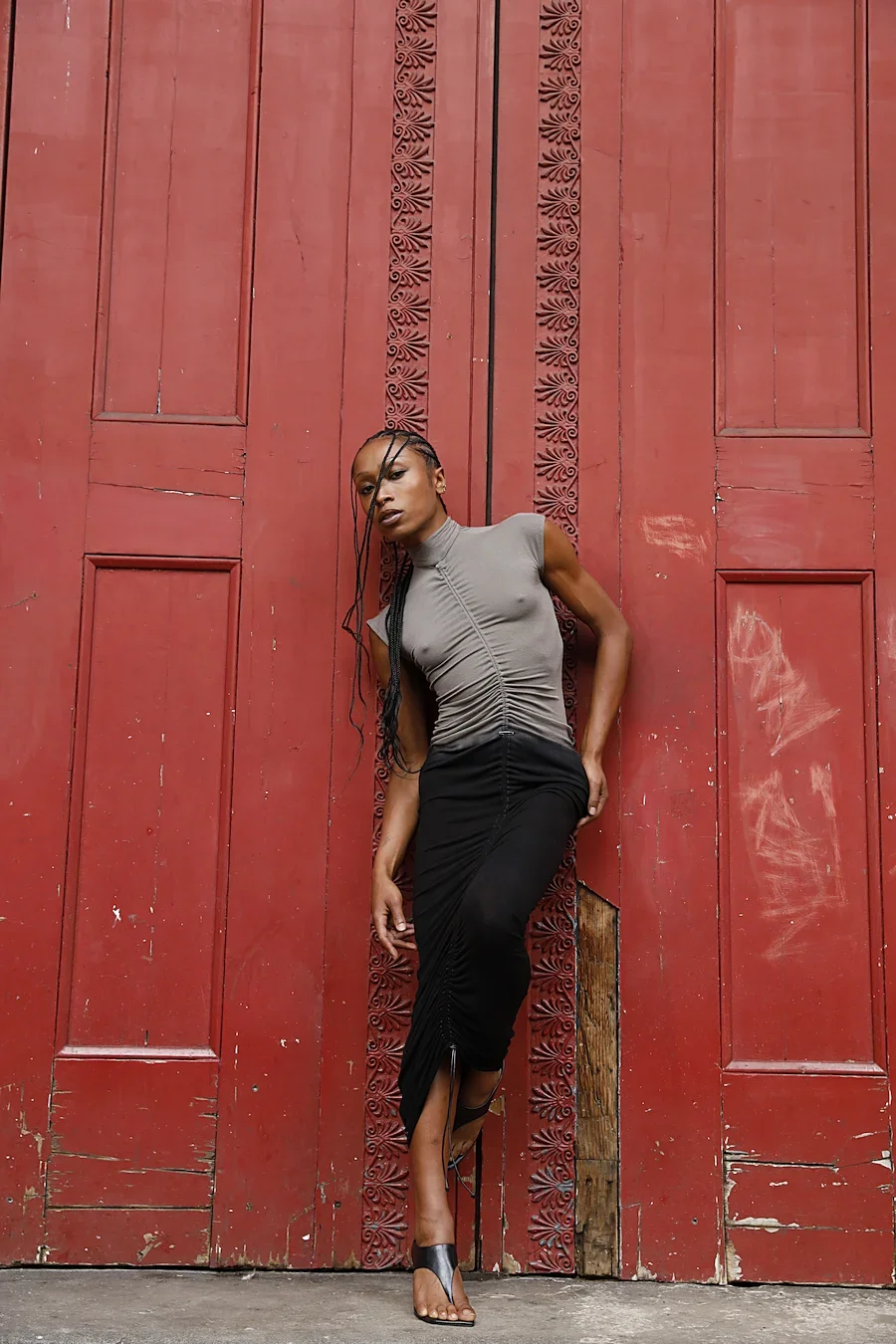
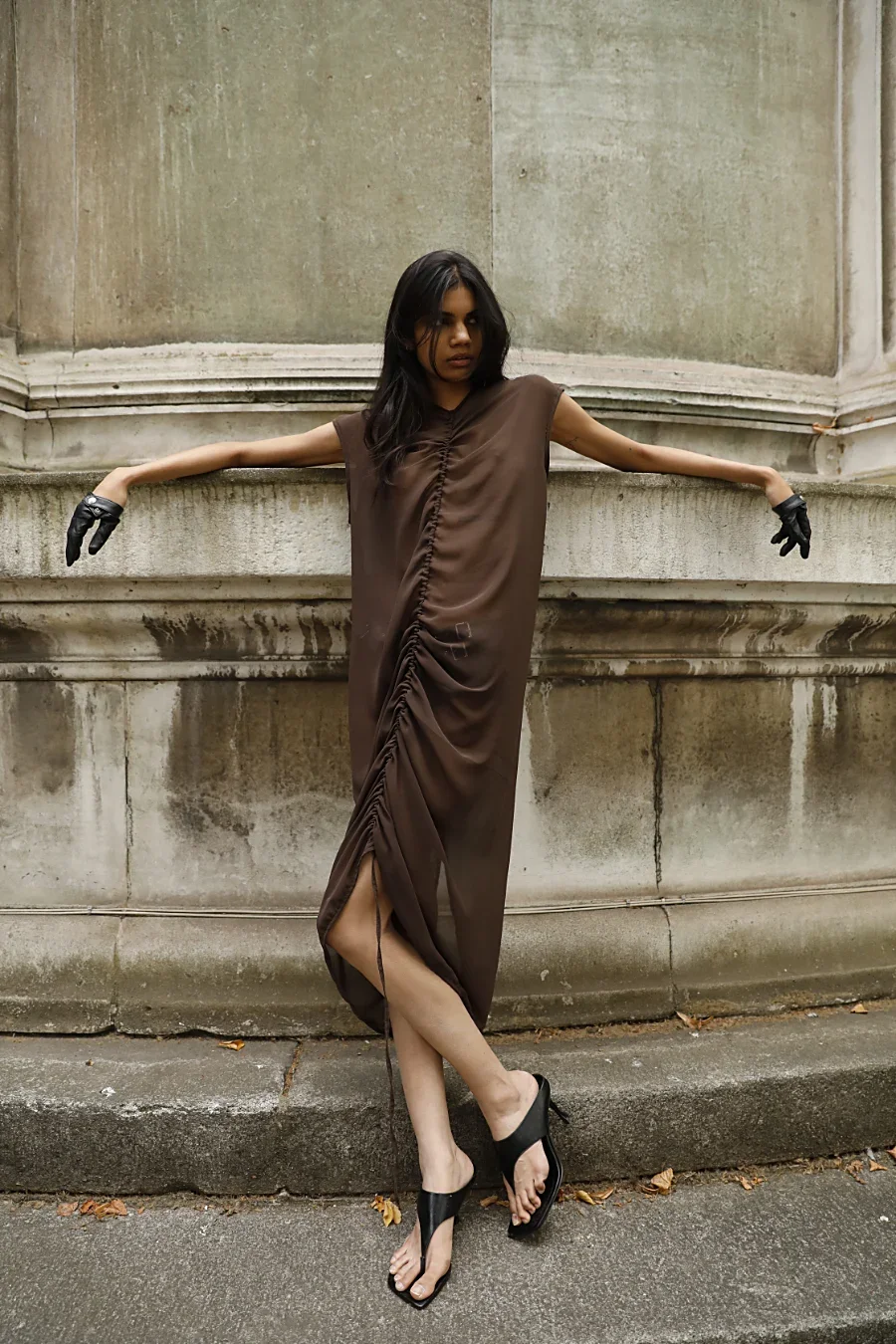
The collection unfolds through three distinct expressions of the Gorgons, where the interplay between architectural constructions and fluid materiality reflects the conflicting forces of repression and release. Stheno, the eldest, embodies authority and aggression through structured tailoring with militarist references, where sharp silhouettes and leather detailing evoke the language of war. In contrast, Euryale introduces sculptural leather pieces, corseted forms and irregular, raw-cut hides that suggest primal emotion and unfiltered violence. Finally, Medusa is expressed through fluid jersey and translucent chiffon, gathered to reveal and exaggerate parts of the body, exploring the tension between desire and fear, restraint and liberation.
The Gorgons emerge not as monsters to be defeated, but as complex female characters, embodying the transformative potential of anger when it is no longer contained.